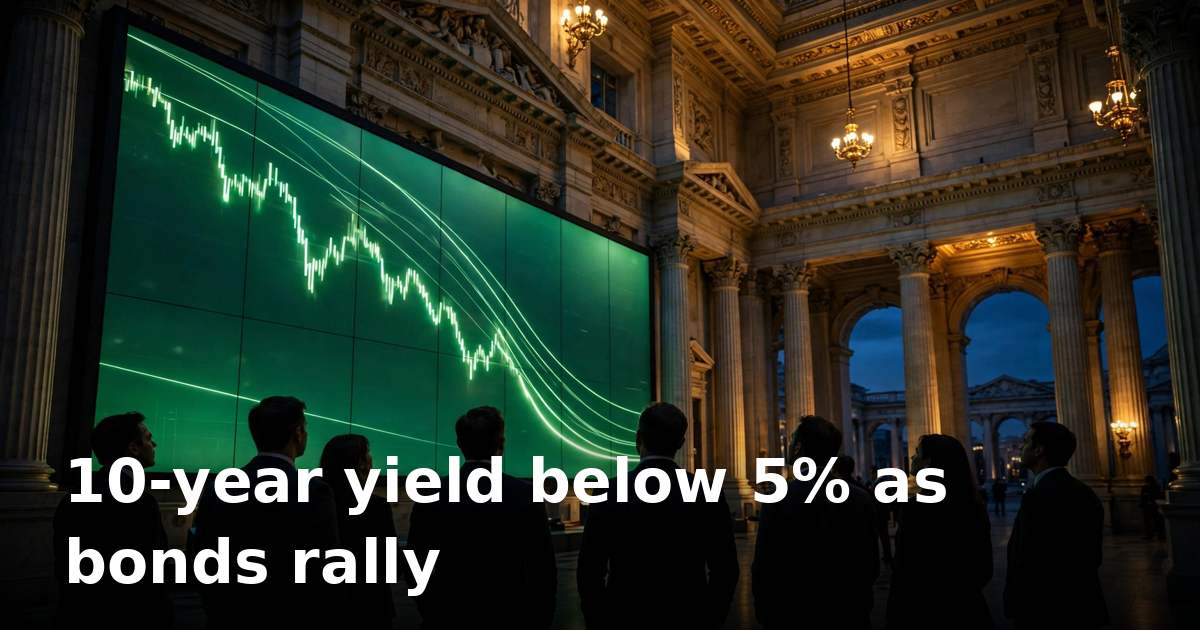

For most of 2026, Treasuries gave stock investors little shelter: hot inflation prints, oil above $110 and a Fed still tightening kept yields grinding higher even on risk-off days. That pattern broke on Thursday, October 22. The benchmark 10-year yield dropped by over 19 basis points. It was the largest single-day fall since March 2023, leaving the yield at 4.9591% on October 23, back under the 5% line. A rout in artificial-intelligence-linked shares sent money racing into government debt.
The trigger was not a jobs report or a speech from a Fed official. It was Meta.
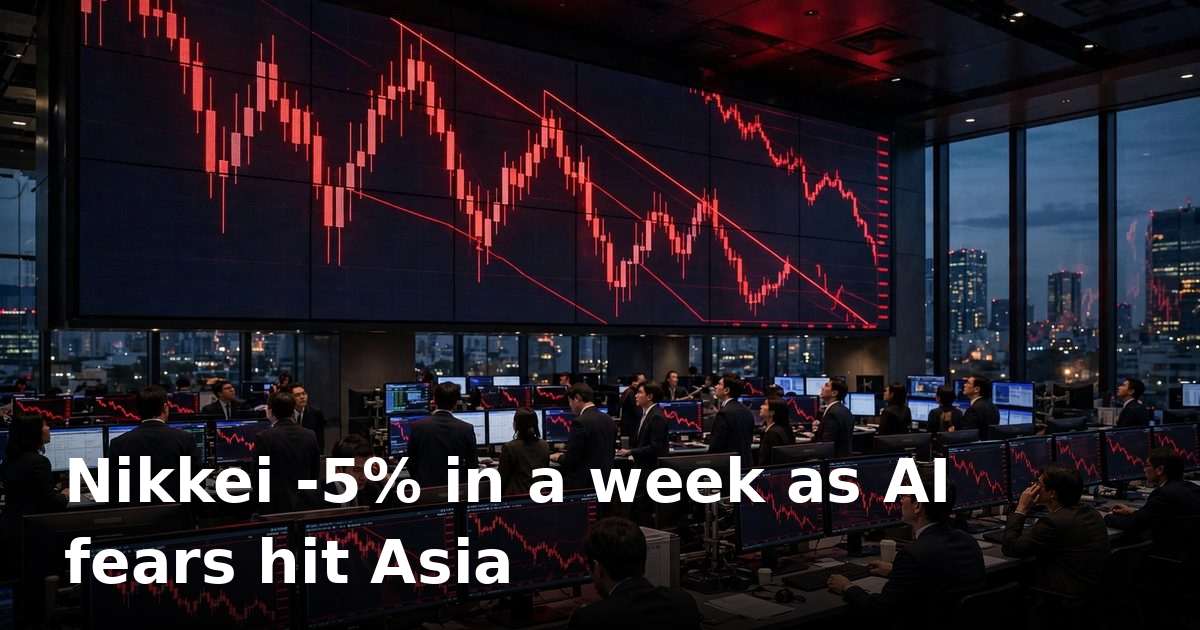
Meta shares lost nearly 8% on Thursday. The Facebook parent reported its first negative cash flow in over ten years, blaming AI spending, and unveiled a 2-for-1 split creating non-voting stock to fund the build-out. Tesla dropped 3.1% after cutting its 2026 capital spending plans. The Nasdaq 100 slid 2.9%. The Philadelphia Semiconductor Index sank 6.7%. It was their worst day since late June. Selling carried into Friday's Asian session: Japan's Nikkei fell 1.3%, South Korea's KOSPI lost 1.7%, and MSCI's Asia-Pacific index outside Japan eased 0.3%, stretching its weekly decline to 2.7% for a fourth straight week.
How the bond rally built up
Investors spent the autumn questioning whether the AI build-out could keep being financed at its current pace. Data-centre spending was funded heavily from debt markets while yields sat near multi-year highs. Thursday's earnings gave that worry a concrete shape. One of the biggest spenders was now burning cash and printing new shares to keep spending. The money went somewhere specific: sovereign bonds across the curve caught a bid within hours in the strongest daily Treasury rally in over three years.
Japan's 10-year yield eased nine basis points to 2.79%. Australia's slipped ten to 5.164%. Haven currencies gained too. The dollar lost 0.2% against the yen to 156.44 on October 23 after an overnight slide of 0.9%. It eased 0.1% to 0.8196 Swiss francs, a one-month low. France ran the other way: its 10-year yield rose six basis points overnight to 5.0601%, the highest since 2002.
Why it matters
When bonds fall with stocks, cash is the only defensive hiding place. Thursday showed the cushion functioning again. Charlie McElligott, managing director for cross-asset strategy at Nomura Securities International, put it bluntly in a note: "US Treasury bonds are – gasp – working as your hedge again, as the market seems to be real-time repricing the probabilities of a US growth scare off the back of the AI reset." Traders removed nearly 25 basis points of anticipated 2027 tightening. A December increase is no longer treated as certain, with implied odds down to 85%.
The rally did not happen in a calm market. Brent crude touched $114, its highest in five months, on October 23 as Houthi attacks in Saudi Arabia raised supply-disruption fears. Producer inflation stayed hot. September producer prices climbed 1.3% on the month and 6.3% versus a year earlier, the strongest annual reading since December 2022. That the 10-year fell anyway shows how forceful the flight from tech shares was. Readers tracking the equity side can compare notes with our Friday close report and the Fed-meeting preview.
The numbers behind the move
| Benchmark | Thursday move | Level |
|---|---|---|
| US 10-year yield | Down over 19bp | 4.9591% on Oct 23; 4.98% at Friday check |
| US 2-year yield | Down almost 19bp | 4.6566% |
| US 30-year yield | Lower on the week | 5.30% at Friday check |
| US 5-year yield | Lower | 4.80% at Friday check |
| Japan 10-year yield | Down 9bp | 2.79% |
| Australia 10-year yield | Down 10bp | 5.164% |
| France 10-year yield | Up 6bp | 5.0601%, highest since 2002 |
The long-bond ETF ended Thursday at $81.74 after a 1.87% climb, while Vanguard's long-duration fund added 1.77% to $52.39.
| Fund | Thursday close | Thursday change | Week change |
|---|---|---|---|
| iShares 20+ Year Treasury ETF (TLT) | $81.74 | +1.87% | +1.6% |
| Vanguard Long-Term Treasury ETF (VGLT) | $52.39 | +1.77% | Not reported |
| iShares 1-3 Year Treasury ETF (SHY) | Not reported | Not reported | +0.2% |
MarketRadar take
A rough duration check explains Thursday's gain. For a portfolio with a modified duration near 10 years, a 19-basis-point yield drop is worth about 1.9% in price. That is almost exactly the 1.87% the long-bond ETF printed, and the reason the week's leaderboard ran TLT first and SHY last. If the 10-year stays under 5% into the October 27-28 meeting, the bond bid has room to extend. The next marker is the $82 level on TLT that the Kobeissi Letter flagged after turning positive on the fund on October 2, with the 10-year then at 5.30%. If risk appetite calms first, the snap-back risk is real. Padhraic Garvey, ING's regional head of research for the Americas, warned that "the US 10-year yield gapped back below 5% with some conviction. We're not convinced it keeps on going," citing inflation, fiscal deficits and the AI boom as forces still to navigate.
Gold underlines that this was a bond story, not a blanket haven story. It sat flat at $4,021.99 on October 23 after an overnight fall of almost 3%. Our October 24 snapshot has it at $3,996.9, down 0.7%. Martin Pelletier, investment manager at TriVest Wealth, noted the same rotation: "In the past month investors rotating into UST and selling gold." Since October began, his figures put long Treasuries up 5% and gold down 3%. Whether bonds keep doing that work depends on the Fed meeting, the next inflation prints, and whether tech earnings stop giving investors reasons to run.
What to watch
- The October 27-28 FOMC meeting: any signal on a follow-up to September's hike to 3.75%-4.00%, with December odds at 85% rather than fully priced.
- Whether the 10-year yield stays under 5% or snaps back above it, the line ING's Garvey flagged as the near-term test.
- Meta and Tesla follow-through: whether Thursday's selling spreads to other AI spenders or stabilises.
- Brent crude near $114 and producer prices 6.3% higher than a year earlier, both arguing against a long calm in yields.