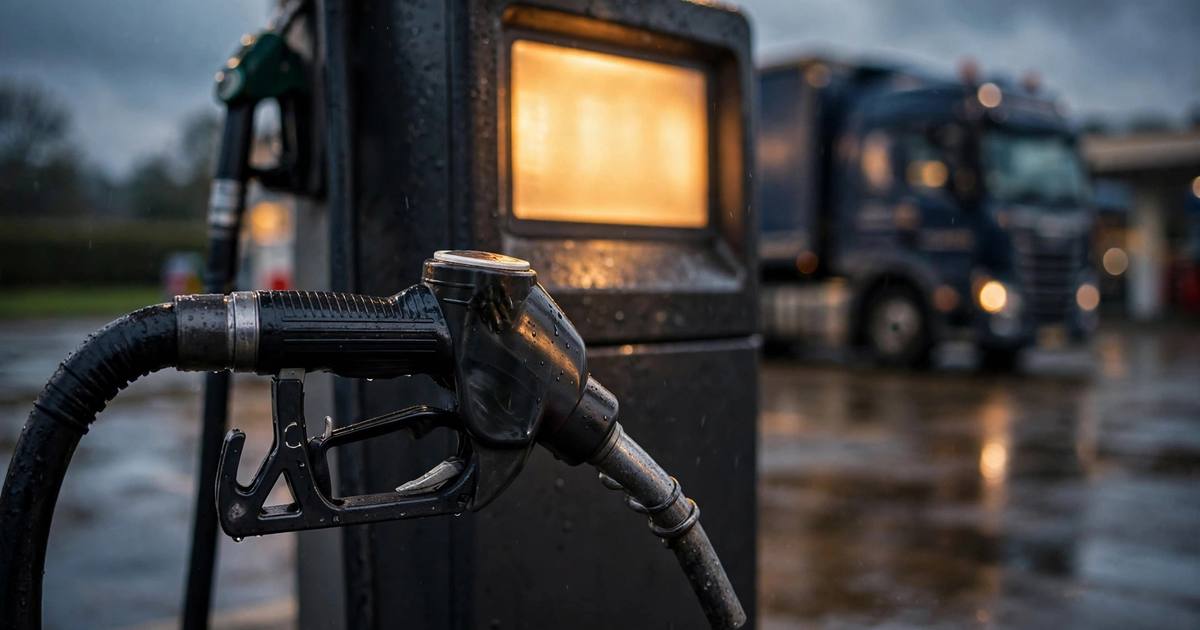

Britain's diesel price is officially the most expensive it has ever been. Government figures published this week put the weekly average at 199.52p a litre for the seven days ending October 5 — above the 199.22p mark set in July 2022 in the weeks after Russia invaded Ukraine. That leaves UK diesel hovering around £2 a litre, roughly $10 a US gallon.
It is the clearest sign yet that the US-Iran war's disruption of Middle East energy routes is biting at the retail level, not just in the wholesale crude market around the $100 Brent mark. When the conflict began on February 28, diesel cost 142.38p a litre. It has since risen 57.6p — a 40% climb in a little over seven months — while petrol has gained 41.9p to 174.71p.
The RAC's own measure had already flagged the milestone last week, when its nationwide average hit 200.01p on Friday, the first time the motoring group had ever recorded £2 diesel. Its previous high of 199.09p dated to June 2022. Whichever series you use, the story is the same: the pump is the new front line.
Diesel matters more than petrol for the economy. Lorries, vans, construction machinery, farm equipment and most delivery fleets all run on it. When diesel is dear, nearly everything else gets more expensive soon after — transport costs land in shelf prices within weeks, not months.
That is why economists are watching this number harder than the crude headlines. UK businesses have already lifted their 12-month inflation expectations from 3.1% to 3.3%, and manufacturers report input prices and delivery times both climbing. The diesel gap over petrol tells its own story: it now runs at roughly 25p a litre, up from under 14p back in July, a sign the squeeze is specific to middle distillates — the fuel the world is short of.
Why it matters
A 55-litre family car now costs £110 to fill with diesel, about £32 more than before the war. Scale that up and the pain compounds: a haulier running a truck through 1,000 litres a week is paying roughly £576 a week more than it was on February 28. Freight bills like that eventually show up in the price of groceries, parcels and building materials.
More than a third of forecourts have pushed diesel past the £2 line — the RAC counts 2,579 of the UK's 8,100 stations, the AA says 2,318 — and supermarket discount schemes have become the cheapest way to soften the blow. Diesel is no longer a motoring story. It is a household-budgets story with an election cycle wrapped around it.
What to watch
- Washington's export threat: Donald Trump has threatened a 90-day ban on American diesel exports to Europe unless governments release emergency reserves. Britain joined crisis talks with EU allies on October 1; the US Treasury Secretary is pressing for immediate stockpile releases. Britain buys in close to 55% of the diesel it burns, with the US supplying roughly a third of that — a ban would be felt fast.
- G7 diesel stock release: Friday's 100-million-barrel G7 emergency release front-loads a large diesel tranche inside the first 20 days. Whether it moves retail prices depends on refineries turning crude into distillates quickly.
- January's fuel-duty rise: duty is scheduled to climb from about 53p to about 56p a litre on January 1. Prime Minister Andy Burnham says "every possible measure" is being considered, including freezing it.
- Budget day, October 28: with inflation expectations ticking up and sterling at 1.3240 against the dollar, the Chancellor walks into the Budget with pump-price politics impossible to dodge.
| Milestone | Price (p/litre) | Source |
|---|---|---|
| War begins, Feb 28 | 142.38 | RAC |
| Jul 2022 record | 199.22 | Government data |
| Sep 28 | 199.18 | RAC |
| Oct 2 (first £2) | 200.01 | RAC |
| Week to Oct 5 | 199.52 | Government data |
MarketRadar take
The number that should worry the Treasury is not the record itself but the trajectory. From the July low of 163.9p, diesel has added roughly 36p in three months while the Strait of Hormuz remains disrupted — and OPEC's November quotas held steady, so no supply cavalry is coming from producers.
For UK households and transport businesses this is a tax that bypasses parliament: every 10p on a litre pulls roughly £5.50 out of a full tank and pushes transport-led inflation higher. If the government freezes January's planned duty rise, it can at best offset a fraction of the war premium. Until Middle East shipping routes normalise for weeks, not days — the RAC's own condition for cheaper pumps — UK diesel stays a drag on growth and an upward force on prices.